
July 2026 - Ezequiel Reyna Law Office

100% FREE CONSULTATION 1-800-935-3739

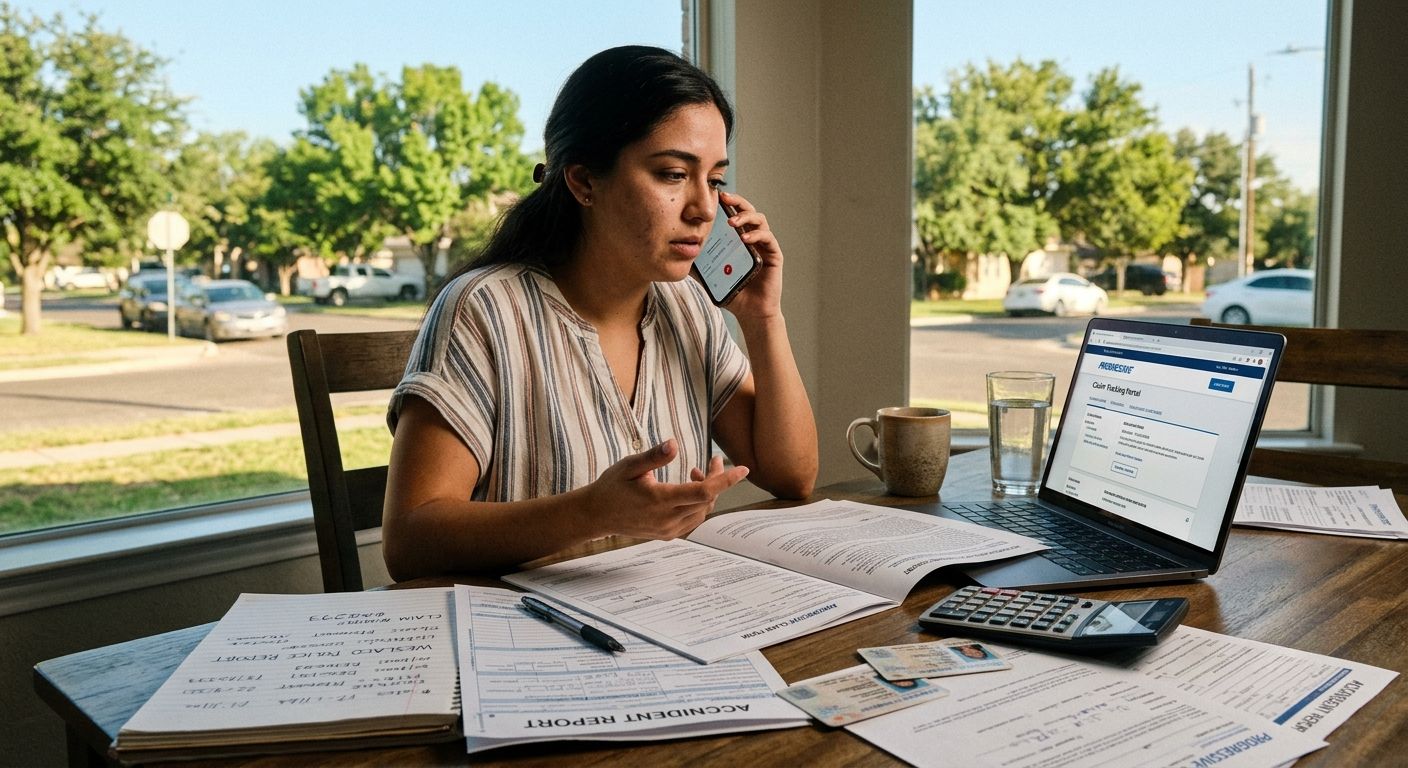
Dealing with Insurance Companies After a Car Accident in Weslaco

A car accident on Business 83, the Expressway, or any of Weslaco’s busy intersections can turn your day upside down in seconds. Once the dust settles, you’re left with vehicle damage, possibly an injury, and a phone call you have to make to an insurance company. How you handle that call  and everything that follows  can make a real difference in how much compensation you actually recover.

Because Texas is an at-fault (tort) state, insurance claims here work differently than in “no-fault” states. Understanding those rules before you start talking to adjusters can help you avoid the common traps that reduce or deny valid claims.

Texas Is an At-Fault State – Here’s What That Means for Your Claim

In Texas, the driver who causes an accident is financially responsible for the damage and injuries that result. This means that after a crash in Weslaco, you generally have three options for seeking compensation:

1.      File a claim with the at-fault driver’s liability insurance

2.      File a claim with your own insurance (if you have applicable coverage, such as collision or uninsured/underinsured motorist coverage)

3.      File a personal injury lawsuit against the at-fault driver

Because fault determines who pays, insurance companies both the other driver’s and sometimes your own will investigate closely to determine how much of the blame they can shift away from their policyholder.

Texas’s Minimum Insurance Requirements

Every driver in Texas must carry liability insurance that meets the state’s minimum requirements, commonly written as 30/60/25:

  •     $30,000 for bodily injury per person
  •     $60,000 for total bodily injury per accident
  •     $25,000 for property damage

These minimums are established under the Texas Transportation Code. Keep in mind that these are minimums many drivers in the Rio Grande Valley carry only the state minimum, which can leave a significant gap if your medical bills or vehicle damage exceed the at-fault driver’s coverage. This is one reason uninsured/underinsured motorist (UM/UIM) coverage and personal injury protection (PIP) both of which Texas insurers must offer, though you can decline them in writing are worth having on your own policy.

Texas Follows Modified Comparative Negligence

One of the most important rules to understand when dealing with an insurance adjuster is Texas’s modified comparative negligence rule, sometimes called the “51% bar rule” (Texas Civil Practice & Remedies Code, Chapter 33).

Here’s how it works:

  •     If you are found 51% or more at fault for the accident, you are barred from recovering any compensation.
  •     If you are found 50% or less at fault, you can still recover damages, but your compensation is reduced by your percentage of fault.

Example: If a Weslaco jury or insurance adjuster determines your damages total $50,000 but assigns you 20% of the fault, your recoverable amount drops to $40,000.

This is exactly why insurance adjusters, even friendly-sounding ones often ask pointed questions about how the accident happened. Their goal is frequently to shift even a small percentage of fault onto you, since every percentage point reduces what they owe. Be careful about giving recorded statements or admitting any fault before speaking with an attorney.

Texas’s Statute of Limitations

Under Texas Civil Practice & Remedies Code § 16.003, you generally have two years from the date of the accident to file a personal injury or property damage lawsuit. If you miss this deadline, you will likely lose your right to pursue compensation through the courts entirely — regardless of how strong your claim was.

While two years may sound like plenty of time, insurance negotiations can drag on, especially with disputed liability or ongoing medical treatment. It’s wise to start the claims process as early as possible and keep the statute of limitations in mind throughout negotiations.

Reporting Requirements in Texas

Texas law requires that a crash be reported to police if it results in injury, death, or apparent property damage of $1,000 or more. If law enforcement doesn’t respond to the scene, drivers involved may need to file their own crash report (Form CR-2) with the Texas Department of Transportation within 10 days.

A police crash report is one of the most valuable pieces of evidence you can have when dealing with insurance companies, as it documents the officer’s initial assessment of fault, weather and road conditions, and statements from those involved.

Common Insurance Company Tactics to Watch For

After an accident, both the at-fault driver’s insurer and your own insurance company may reach out. Some common tactics adjusters use include:

  •     Requesting a recorded statement early, before you know the full extent of your injuries
  •     Offering a quick, lowball settlement before medical treatment is complete
  •     Disputing the severity of your injuries or claiming they existed before the accident
  •     Delaying the claims process, hoping you’ll accept less out of frustration or financial pressure
  •     Asking you to sign broad medical authorizations that allow them to dig through your unrelated medical history

Remember: adjusters work for the insurance company, not for you. A personal injury lawyer Weslaco accident victims rely on can communicate directly with insurance adjusters, protect you from unfair settlement tactics, and help ensure your claim is properly valued. Their performance is often measured by how much money they save the company on claims.

Steps to Protect Your Claim in Weslaco

  1.     Seek medical attention promptly, even if injuries seem minor some, like whiplash or soft tissue damage, appear days later. This also creates a medical record tying your injuries to the crash.
  2.     Document everything photos of the vehicles, the accident scene, visible injuries, and any relevant road conditions (intersections along Expressway 83 and Business 83 see frequent accidents).
  3.     Get the police report number and request a copy from the local police department or Hidalgo County authorities.
  4.     Notify your own insurance company of the accident, even if you weren’t at fault — most policies require prompt notice.
  5.     Avoid giving recorded statements to the other driver’s insurance company without first understanding your rights.
  6.     Keep records of lost wages, medical bills, and repair estimates to support your claim.
  7.     Don’t accept the first settlement offer without evaluating whether it truly covers your current and future expenses.

Should You Handle the Claim Yourself or Get Legal Help?

For minor accidents with clear fault and only property damage, many people can negotiate directly with insurance companies. However, if you’ve suffered an injury, if fault is disputed, or if the insurance company is undervaluing your claim, consulting a car accident lawyer Weslaco residents trust can make a significant difference. An experienced personal injury lawyer Weslaco drivers rely on understands Texas insurance laws, local court procedures, and how to negotiate with insurance companies that try to minimize payouts.  An experienced local attorney can help you:

  •     Accurately value your claim, including future medical needs
  •     Push back against unfair fault allocations under the comparative negligence rule
  •     Negotiate with adjusters who are trained to minimize payouts
  •     File suit before the two-year statute of limitations expires, if negotiations stall

Final Thoughts

Dealing with insurance companies after a car accident in Weslaco requires an understanding of Texas’s at-fault system, the 51% bar rule for comparative negligence, and the two-year deadline for filing a lawsuit. Insurance adjusters are professionals who negotiate claims every day — arming yourself with knowledge of your rights under Texas law is one of the best ways to make sure you aren’t shortchanged during the process.

Need Help With Your Claim? Contact Ezequiel Reyna Law Office

If an insurance company is undervaluing your claim, disputing fault, or pressuring you to settle quickly after a car accident in Weslaco, the Ezequiel Reyna Law Office can help. With over 45 years of experience fighting for injury victims across the Rio Grande Valley, our team knows how local insurance adjusters operate and how to push back.

We also have offices in McAllen and Midland to serve clients throughout South and West Texas. Consultations are free, Don’t wait until it’s too late – Texas law gives you only two years to file a claim. Contact the Ezequiel Reyna Law Office today for your free consultation.


What Should You Do If You’re Injured in a Fourth of July Car Accident in Texas?

The Fourth of July should be about making memories with family and friends, not spending the holiday in an emergency room or worrying about how you’re going to pay your medical bills. Unfortunately, every year we see serious crashes caused by speeding, distracted driving, and impaired drivers during one of the busiest travel weekends in Texas.

For more than 45 years, the Ezequiel Reyna Law Office has stood beside families whose lives changed in a matter of seconds because of another driver’s careless decision. During busy holiday weekends like the Fourth of July, we often see an increase in serious car accidents caused by distracted driving, speeding, and impaired drivers. If you have been injured in a Texas car accident, call us and we will help you.

What Should I Do Immediately After a Car Accident?

The moments following a crash can be overwhelming. Taking the right steps can make a significant difference in your recovery and any future insurance or legal claim.

If possible, you should:

  • Check yourself and your passengers for injuries.
  • Call 911 if anyone is injured or if there is significant property damage.
  • Request that law enforcement respond and complete an official accident report.
  • Move your vehicle to a safe location if it can be done safely.
  • Exchange contact and insurance information with the other driver.
  • Take photographs of the vehicles, roadway, skid marks, traffic signals, weather conditions, and any visible injuries.
  • Collect contact information from witnesses.
  • Avoid discussing fault or apologizing at the scene.

Over the years, we have seen small details make a big difference in a case. Taking photographs, getting witness information, and making sure a police report is completed can help protect your rights later. 

What If the Other Driver Was Drunk?

Unfortunately, holiday weekends often bring a spike in drunk driving crashes. Fourth of July celebrations frequently involve alcohol, making impaired driving one of the leading causes of serious holiday accidents.

If you believe the other driver is intoxicated:

  • Tell the responding police officer about your observations.
  • Do not argue with or confront the driver.
  • Allow law enforcement to conduct its investigation.

A driver arrested for Driving While Intoxicated, or DWI, may face criminal penalties, but that is separate from your right to pursue compensation through a personal injury claim.

Depending on the circumstances, you may be able to recover compensation for:

  • Medical expenses
  • Lost wages
  • Future medical treatment
  • Pain and suffering
  • Property damage
  • Physical impairment
  • Mental anguish

Police reports, witness statements, body camera footage, field sobriety tests, and blood alcohol evidence can all become important pieces of evidence in your case.

What If I Don’t Feel Injured Until Later?

This is one of the most common questions we hear.

After a traumatic collision, your body’s adrenaline can temporarily mask pain. It is not unusual for symptoms to appear several hours or even days after the accident.

Some injuries commonly associated with delayed symptoms include:

  • Whiplash
  • Concussions
  • Soft tissue injuries
  • Neck and back injuries
  • Internal injuries

If you begin experiencing headaches, dizziness, numbness, stiffness, pain, or any new symptoms after leaving the accident scene, seek medical attention as soon as possible.

Prompt medical treatment not only protects your health but also creates documentation linking your injuries to the accident. Waiting too long to seek treatment may allow an insurance company to argue that your injuries were caused by something else.

Should I See a Doctor Even If I Feel Fine?

Yes.

Even if you believe your injuries are minor, it is wise to be evaluated by a medical professional after any significant collision.

Many serious injuries, including concussions, internal bleeding, and soft tissue injuries, may not produce immediate symptoms. Early diagnosis can prevent complications and create important medical records documenting your condition from the beginning.

Your health should always come first.

Should I Talk to the Insurance Company?

You should report the accident to your own insurance company promptly. However, you should be cautious when speaking with the other driver’s insurance company.

Insurance adjusters often begin investigating claims immediately and may request:

  • A recorded statement
  • Medical authorizations
  • Quick settlement agreements

One of the biggest mistakes we see people make is assuming the insurance company is looking out for them. Their job is to protect their company. Our job is to protect you and your family’s future. 

Before accepting any settlement or signing documents, make sure you understand the full extent of your injuries and damages. Once you settle your claim, you may lose the right to seek additional compensation later.

What Compensation Can I Recover After a Texas Car Accident?

Every case is unique, but depending on the circumstances, injured victims may be entitled to compensation for:

  • Current and future medical expenses
  • Lost income
  • Reduced earning capacity
  • Property damage
  • Pain and suffering
  • Physical impairment
  • Mental anguish

The value of a claim depends on several factors, including the severity of your injuries, available insurance coverage, and the evidence supporting your case.

How Long Do I Have to File a Car Accident Claim in Texas?

Texas law generally limits the amount of time you have to file a personal injury lawsuit after a motor vehicle accident.

Because every case is different, and certain exceptions may apply, it is important to speak with an experienced Texas car accident attorney as soon as possible. Acting early also helps preserve valuable evidence before it is lost or destroyed.

Final Thoughts

The Fourth of July should be remembered for celebrating with the people you love, not for a preventable tragedy.

If you’ve been injured in a Texas car accident during the holiday weekend, your priorities should be protecting your health, documenting the accident, and understanding your legal rights as soon as possible.

Whether the crash was caused by distracted driving, speeding, or an impaired driver, calling our office immediately is the right step to make a meaningful difference in both your recovery and your ability to pursue the compensation you deserve.

Standing With You When It Matters Most

For more than 45 years, the Law Offices of Ezequiel Reyna Jr. has stood beside individuals and families whose lives were turned upside down by serious accidents. We understand how overwhelming the days following a crash can be. Our team is here to answer your questions, handle the insurance companies, and fight for the compensation you deserve while you focus on your recovery.

If you or a loved one has been injured in a Fourth of July car accident, do not wait to learn about your legal options. Contact the Law Offices of Ezequiel Reyna Jr. Personal Injury Law today for a free consultation. From our offices in Weslaco and McAllen, we proudly represent accident victims throughout the Rio Grande Valley, South Texas, and the Midland Odessa area.

Call (956) 968-9556 today to speak with an experienced Texas car accident attorney. We are available 24 hours a day, 7 days a week, including nights, weekends, and holidays, because accidents do not wait, and neither should you.


Who Is Liable for Swimming Pool Accidents? A Premises Liability Guide for Summer

South Texas enjoys its summers with backyard parties, neighbourhood gatherings, and long afternoons spent at the pool. Families enjoy pool time during peak summers, but they are unaware that it can also be one of the most dangerous places on any of the properties. Accidents are quite common, and the legal proceedings after that are complicated and difficult. 

Who is liable for swimming pool accidents? Is it the homeowner? The property manager? A contractor? The answer depends on where the accident occurred, who controlled the property, and whether negligence played a role. This guide breaks down the key legal concepts every person in Texas should understand before this summer gets into full swing.

What Makes Swimming Pools a Legal Liability?

Under Texas premises liability law, property owners have a legal duty to maintain a reasonably safe environment for people who visit their property. When a swimming pool is involved, that duty becomes even more significant. Pools are legally classified as “attractive nuisances,” a legal doctrine recognizing that certain property features naturally draw people in, especially children, even when access is not intended or permitted.

Because of this doctrine, swimming pool accident liability extends further than many property owners realize. Even if a child trespassed onto the property and was not invited, the pool owner may still be held liable for the resulting injury if the pool was inadequately fenced, the gate was broken, or the area was otherwise not properly secured.

Who Can Be Held Liable After a Swimming Pool Accident?

Swimming pool negligence cases involve several potential parties, depending on the circumstances of the accident and who had responsibility for maintaining the pool and its surrounding area.

Residential Pool Owners

If you or your child are injured at someone else’s home in or around their swimming pool, the homeowner may be liable under premises liability law. Common grounds for residential pool accident claims include failure to install proper fencing, absence of self-latching gates, broken or missing pool equipment such as ladders or drain covers, inadequate warning signs for shallow water or no-diving zones, and failure to supervise guests, particularly children.

Homeowner’s insurance typically covers swimming pool injury claims, but insurance carriers routinely attempt to minimize what they pay out. Speaking with a premises liability attorney before accepting any settlement offer is an essential step in protecting your rights.

Public Pool and Hotel Liability

When a swimming pool accident occurs at a hotel, apartment complex, public pool, or water park, liability falls on the business or property management company that controls the facility. These entities are held to a high standard of care, which includes maintaining all equipment in safe working order, posting clear warning signs, ensuring proper drain covers are installed, and providing adequate lifeguard supervision.

A public pool injury liability claim can arise from absent or inattentive lifeguards, slippery deck surfaces without proper non-slip materials, defective equipment such as slides or diving boards, and failure to comply with state and local health and safety codes. Any of these failures can constitute swimming pool negligence and give rise to a valid injury claim.

Rental Property and Vacation Home Pools

Summer swimming pool injuries that occur at rental properties, vacation homes, or short-term rentals introduce additional complexity. In these situations, liability can rest with the property owner, the management company, the rental platform, or even a contracted pool maintenance company, depending on who bore responsibility for ensuring the pool met applicable safety standards.

If the accident happened because of inadequate fencing, a defective drain, absence of pool safety rules, or failure to warn guests about known hazards, multiple parties could potentially be named in a swimming pool accident lawsuit.

Common Causes of Pool Accidents and Injuries

Understanding how swimming pool accidents most commonly occur helps identify where negligence arises and who may be responsible. Let us see the causes in detail:

  • The most frequent causes of residential and public pool accidents include slip-and-fall accidents on wet pool decks or surrounding surfaces.
  • Inadequate or broken fencing that allows unsupervised access
  • Missing or unclear warning signs for shallow water or restricted zones 
  • Defective equipment, including ladders
  • Driving boards and pool slides
  • Malfunctioning drain covers that can entrap swimmers
  • The absence of proper lifeguard supervision at commercial or apartment complex pools.

The Real Scope of Swimming Pool Injuries in America

Swimming pool injuries are far more common than most people realize. According to the United States Consumer Product Safety Commission (CPSC), an average of 371 pool drowning deaths and 6,300 emergency-room-treated submersion injuries involving young children occur each year in pools and spas across the country. Children under the age of five are the most at-risk group. Most of these tragedies involve preventable circumstances like inadequate fencing or a brief lapse in supervision.

Beyond drowning, summer swimming pool injuries also include traumatic brain injuries from diving accidents or striking the pool edge, spinal cord injuries resulting from slips and falls, back and soft tissue injuries from pool deck accidents, lacerations from damaged equipment or pool edges, and near-drowning incidents that result in lasting neurological damage.

What Does a Premises Liability Claim Require?

To bring a successful premises liability claim for pool injuries, four key elements generally need to be established. Let us see them in detail:

  • First, the defendant must have owned or controlled the property where the accident occurred. 
  • Second, a dangerous condition must have existed on that property. 
  • Third, the owner must have known about the hazard or reasonably should have known about it. 
  • Fourth, that dangerous condition must have directly caused the victim’s injury and resulting damages.

Evidence that can support these elements includes photographs of the accident scene, maintenance logs, inspection records, witness statements, and medical documentation. Because some of this evidence is time-sensitive, acting quickly after an accident is critical.

Pool Owner Responsibilities Under Texas Law

Pool owners in Texas carry clearly defined legal responsibilities under both premises liability principles and local safety codes. These include:

  • Installing fences at least four feet high with self-closing and self-latching gates around any pool
  • Ensuring the pool area is adequately lit with clearly posted warning signs 
  • Maintaining all pool equipment including drains, filters, ladders, and pool covers in proper working condition
  • Providing adequate supervision whenever the pool is in use, especially when children are present
  • Keeping life-saving equipment such as life rings and reaching poles readily accessible near the water.

When a pool owner fails to uphold these responsibilities, and someone is hurt as a result, a pool accident compensation claim becomes a legally available option for the injured person or their family.

What to Do After a Swimming Pool Accident?

If you or a family member is injured in or around a pool this summer, the steps you take right away can significantly affect both your health and the strength of any future legal claim.

  • Seek immediate medical attention, even for injuries that appear minor at first. 
  • Some of the most serious pool-related conditions, including traumatic brain injuries and internal damage, may not show clear symptoms for hours or even days. 
  • Report the incident to the property owner or pool manager and request a written incident report. 
  • Document the scene as thoroughly as possible with photographs and video. 
  • Collect names and contact information from any witnesses who saw what happened. 
  • Do not speak to the property owner’s insurance company without first consulting an attorney, as early statements can be used against you when determining pool accident compensation.

You can visit the Ezequiel Reyna Law Office resources and updates section to learn more about what should be done after a swimming pool accident. 

Swimming pool negligence can upend lives in an instant. If you or someone you love has been hurt in a pool accident this summer, you deserve to know your options and have a skilled legal team fighting for you.

At Ezequiel Reyna Law Office, we handle premises liability cases throughout South Texas with the dedication that injured victims deserve. We have also handled cases involving wrongful death resulting from fatal pool accidents, helping families pursue accountability and justice when they need it most. You can learn more about our team on our About Us page. When you are ready to discuss your situation, contact us today for a free, no-obligation consultation.

No pool owner’s negligence should be left without consequences, and no injured victim should have to navigate the legal process alone. We are here to help.