
April 2026 - Ezequiel Reyna Law Office

100% FREE CONSULTATION 1-800-935-3739

Looking for a Motorcycle Accident Lawyer in McAllen? Read This First

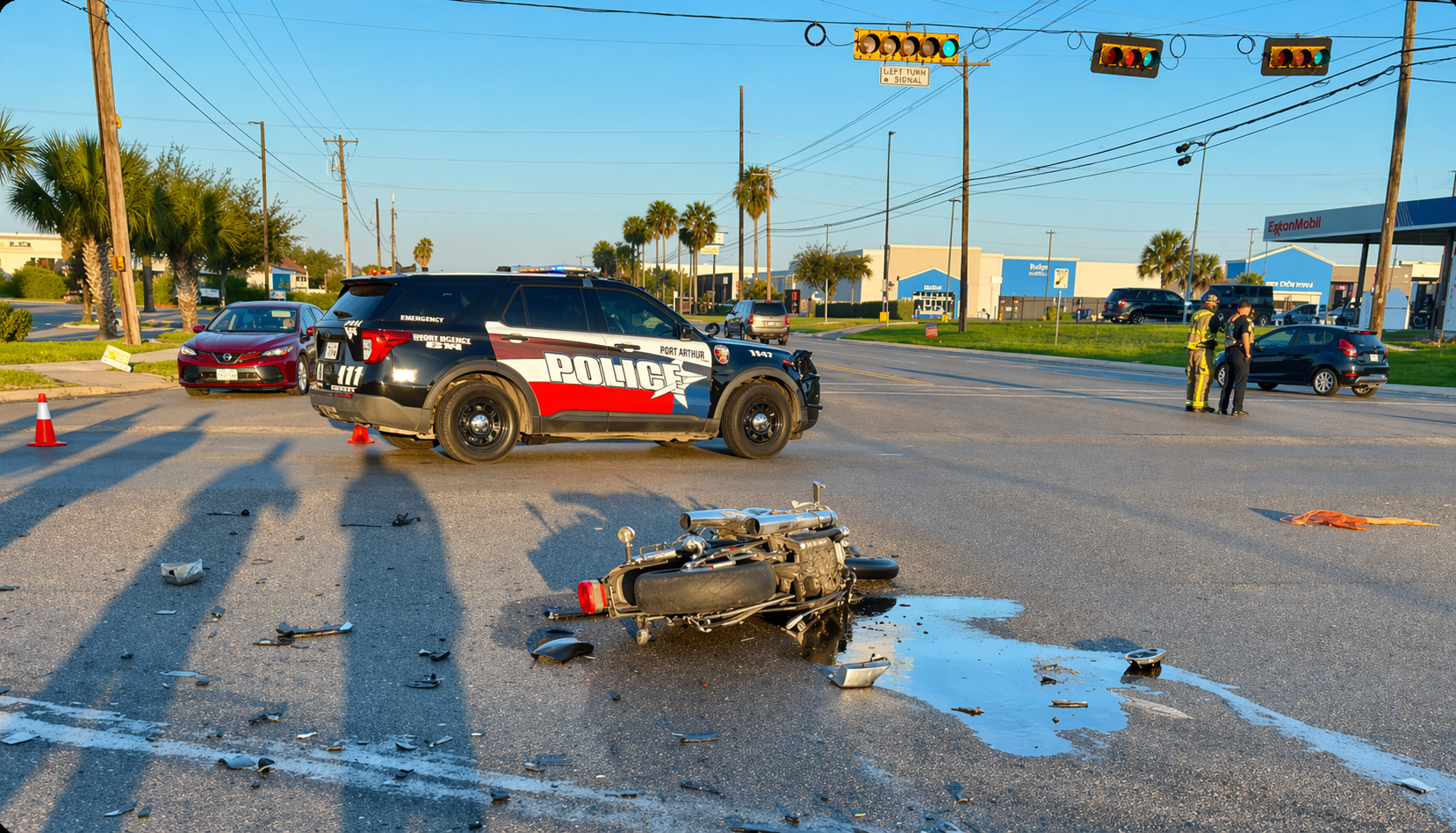
If you’ve been involved in a motorcycle accident in McAllen or anywhere in Hidalgo County, what you do next matters.

Insurance companies begin building their case immediately and not in your favor. While you’re trying to recover, they are working to limit what they pay.

At the Ezequiel Reyna Law Office, we’ve seen how overwhelming this time can be. One of the most important decisions you will make is whether to hire a motorcycle accident lawyer in McAllen, and if so, when to do it and what to look for. This guide will help you understand your rights, your deadlines, and what it takes to protect your case.

Why Motorcycle Accident Claims Are Treated Differently Under Texas Law?

Insurance companies frequently attempt to characterize the injured motorcyclist as reckless or otherwise responsible for the collision even when the facts do not support that conclusion. A qualified motorcycle accident lawyer in McAllen understands how to build a case that neutralizes that bias with documented evidence, accident reconstruction, witness testimony, and a command of applicable Texas statutes.

The Two-Year Deadline You Cannot Afford to Ignore

Before anything else, motorcycle accident victims in McAllen need to understand the statute of limitations. Under Texas Civil Practice and Remedies Code § 16.003(a), you have two years from the date of the accident to file a personal injury lawsuit. Missing this deadline means permanently forfeiting your right to any compensation, regardless of how serious your injuries are or how clearly the other driver was at fault.

Critical exceptions McAllen motorcycle accident attorneys monitor closely:

Minors

Under Texas Civil Practice and Remedies Code § 16.001, if the injured person is a minor at the time of the accident, the statute of limitations is tolled, meaning it does not begin running until they turn 18.

Government entities

If a government-owned vehicle caused your accident, such as a city bus, county fleet vehicle, or state agency car, the Texas Tort Claims Act requires written notice of your claim within 180 days of the accident, far shorter than the standard two-year period. This is especially relevant on McAllen’s most congested routes, including Expressway 83 and US-281.

Mental incapacity

If the injured party was of unsound mind when the cause of action accrued, the limitations period is tolled under Texas Civil Practice and Remedies Code § 16.001(a)(2) until they regain legal capacity.

If you are uncertain whether your deadline is approaching, consult a McAllen motorcycle accident attorney immediately. Timing matters. Evidence can disappear, and insurance companies act quickly. Getting the right guidance early can make a meaningful difference in your case. 

What You Can Recover: Types of Damages.

Let us look into some of these below in detail:

Economic Damages

These are measurable losses supported by bills and financial documentation. Compensable medical expenses include emergency treatment, hospitalization, surgery, rehabilitation, prescription medications, and projected future medical costs. For catastrophic injuries, lifetime medical expense projections developed with medical and economic experts can represent the largest single component of your claim.

Lost wages are also compensable, along with future lost earning capacity if your injuries affect your ability to return to prior work. Property damage covers full repair costs or pre-accident fair market value if your bike is totaled, plus riding gear and personal items destroyed in the crash.

Non-Economic Damages

These are losses that do not come with receipts but are fully recognized under Texas law, including chronic pain, emotional trauma, PTSD, anxiety, disruption to daily routines, and loss of enjoyment of life.

Texas attorneys use the multiplier method as a framework for calculating total economic damages, multiplying them by a factor ranging from 1.5 to 5, depending on injury severity. Minor injuries that resolve fully may warrant a multiplier of 1.5 to 2.0. Catastrophic injuries, including traumatic brain injuries, spinal cord damage, and amputations, may warrant multipliers of 4 or 5.

Punitive Damages

Under Texas Civil Practice and Remedies Code § 41.003, punitive damages apply when conduct rises to the level of gross negligence, such as drunk driving, street racing, or fleeing law enforcement. They are capped at two times economic damages plus non-economic damages, up to $750,000 or $200,000, whichever is greater.

Texas Modified Comparative Fault and the 51% Bar Rule.

Under Texas Civil Practice and Remedies Code § 33.001, if you are found 51% or more at fault, you are barred from recovering any compensation. If you are 50% or less at fault, your compensation is reduced proportionally.

For example, if your total eligible damages equal $200,000 and you are found 25% at fault, you recover $150,000. If you are found 51% at fault, you recover nothing.

Insurance adjusters are trained to shift fault onto motorcyclists. Retaining an experienced motorcycle accident lawyer in McAllen from the beginning is one of the most financially protective steps you can take.

Why Hiring a Motorcycle Accident Lawyer in McAllen Makes a Financial Difference

Having experienced legal representation can make a significant difference in how your case is prepared, valued, and negotiated.

At the Ezequiel Reyna Law Office, we work to ensure nothing is overlooked. That includes identifying future damages, preserving critical evidence, and building a case that fully reflects what you’ve been through.

This often involves:

  • Ensuring future damages are not left out of any settlement
  • Thorough evidence preservation, including police reports, camera footage, and witness statements
  • Accident reconstruction gathered before evidence disappears
  • Protecting you from unfair fault being assigned by insurance companies
  • Negotiating from a position of strength, especially when litigation may be necessary

McAllen motorcycle accident attorneys typically handle cases on a contingency fee basis, meaning you pay no attorney fees unless they win your case.

Frequently Asked Questions

What if I were partially at fault?

You may still be able to recover compensation as long as you are 50% or less at fault. Under Texas law, if you are found 51% or more responsible, you cannot recover damages. This is why it’s important to have someone protecting your side of the case from the beginning.

Does wearing a helmet affect my claim?

It can become a factor, especially in cases involving head injuries. Insurance companies may try to use this to shift fault. An experienced attorney will address this and work to keep the focus on what actually caused the accident.

Do I need a lawyer for minor injuries?

Even injuries that seem minor at first can become more serious over time. Insurance companies often move quickly to settle before the full impact is known. Having guidance early can help ensure your case reflects everything you’ve been through.

If you or a loved one was injured in a motorcycle accident in McAllen, Weslaco, or anywhere in the Rio Grande Valley, contact the Ezequiel Reyna Law Office for a 100% free consultation. With over 45 years of fighting for injured Texans, they serve clients from offices in McAllen (1200 Auburn Ave, Bldg. 200, Ste. 275) and Weslaco (702 W. Expressway 83, Suite 100). They handle motorcycle accidents, car accidents, 18-wheeler crashes, commercial vehicle accidents, oilfield injuries, and wrongful death claims, fighting to recover the full compensation you deserve under Texas law.


What Is a Slip and Fall Case? Everything You Need to Know in 2026

Every year, millions of people are injured after slipping, tripping, or falling on someone else’s property. Many walk away, sometimes literally, without realizing they had every right to seek compensation.

A slip-and-fall case is a type of personal injury lawsuit that holds property owners legally responsible when a hazardous condition on their premises injures someone. These cases fall under the law of premises liability, and they are far more common and legally complex than most people realize.

Understanding what a slip and fall case actually involves can be the difference between walking away with nothing and receiving the compensation you genuinely deserve. This guide covers the legal foundation, what you need to prove, what steps to take after an accident, and how much your case might be worth.

The Legal Foundation: What Makes a Fall a “Case”?

Not every fall on someone else’s property results in a viable lawsuit. The law does not expect property owners to prevent every possible accident; it expects them to act reasonably. The central question in any slip-and-fall case is whether the property owner knew, or should have known, of the dangerous condition and failed to address it promptly.

This standard is known as the reasonable person standard. If a grocery store employee mops the floor and immediately puts up warning signs, that is reasonable. If a spill sits unattended for two hours during peak shopping time with no warning signs in sight, that is negligence and the foundation of a solid claim.

Your legal status on the property also matters. Customers in a store receive the highest duty of care. Social guests in a private home are expected to pay a moderate fee. Trespassers, in most cases, receive very little protection under the law, with limited exceptions for children under the attractive nuisance doctrine.

Common Causes of Slip and Fall Accidents

Slip-and-fall accidents occur in a wide range of environments. Wet or slippery floors are the most widely recognized cause, whether from spills, recently mopped surfaces, or roof leaks. Uneven pavement, broken tiles, loose carpet edges, icy walkways, poorly lit stairwells, and missing or damaged handrails all regularly give rise to these claims.

In workplace settings, OSHA consistently ranks slips, trips, and falls among the leading causes of serious occupational injuries. In retail, restaurants, and apartment buildings, the combination of heavy foot traffic and variable maintenance standards creates frequent opportunities for negligence.

The setting matters legally because it affects who is responsible and what duty of care applies. A fall in a shopping mall involves different considerations than one on a construction site, a private residence, or a government-owned sidewalk.

The Four Things You Must Prove

To successfully pursue a slip and fall case, you and your attorney must establish four distinct legal elements. Think of them as four links in a chain; break any one of them and the claim falls apart.

First, you must show that the property owner owed you a duty of care. This is usually the easiest element to establish; if you were a customer in a store or a tenant in a building, a duty clearly existed.

Second, you must demonstrate a breach of that duty, meaning the owner failed to maintain a reasonably safe environment. This is where evidence such as surveillance footage, maintenance logs, prior incident reports, and witness accounts becomes critical.

Third, you must prove causation, meaning the breach directly caused your injury. Insurance companies often try to argue that a pre-existing condition, not the fall, is responsible for your pain. Strong medical documentation linking your injuries to the accident is essential here.

Finally, you must show that you suffered actual damages, measurable harm such as medical bills, lost income, or pain and suffering. Even when liability is clear, a case without significant damages rarely justifies the expense of litigation.

What to Do After a Slip and Fall Accident

The moments immediately after a slip-and-fall are more legally significant than most people realize. Seek medical attention even if you feel relatively okay. Certain injuries, including concussions and soft tissue damage, do not always present symptoms right away, and a medical record created close in time to the accident is far more convincing than one made days later.

Report the incident to the property owner or manager before you leave and request a written incident report. Take photographs of the hazard, your injuries, and the surrounding area, particularly before anything is cleaned up or repaired. If there were witnesses, get their names and contact information.

One of the most overlooked steps is requesting preservation of surveillance footage. Many businesses overwrite their video recordings within 24 to 72 hours. Your attorney can send a legal preservation letter to stop that from happening, but only if you act quickly.

Be cautious about what you say to the property owner or their insurance company before speaking with an attorney. Statements made in the immediate aftermath, even well-intentioned ones like “I’m fine,” can be used against you later.

What Compensation Can You Recover?

Compensation typically falls into two broad categories. Economic damages cover tangible financial losses, including past and future medical bills, lost wages, reduced earning capacity, and rehabilitation costs. 

Non-economic damages address pain and suffering, emotional distress, loss of enjoyment of life, and, in severe cases, loss of consortium.

Settlement amounts vary considerably depending on the severity of the injuries, the clarity of liability, and the jurisdiction. A case involving a minor sprain may settle for $10,000 to $30,000. 

A case involving a traumatic brain injury or permanent disability can reach well into the hundreds of thousands. Most slip and fall cases, roughly 95%, are resolved through negotiation with the property owner’s insurance carrier rather than going to trial.

How Long Do You Have to File?

Every state has a statute of limitations, a legal deadline for filing a personal injury lawsuit. In most U.S. states, this window is two to three years from the date of the accident. Claims against government entities can involve even shorter deadlines, sometimes as little as six months. If your accident occurred on public property, speaking with an attorney quickly is especially important.

Know What Your Slip and Fall Case Is Worth Before You Settle

If you were injured in McAllen, Weslaco, or anywhere in the Rio Grande Valley, speak with an experienced slip-and-fall lawyer McAllen residents trust. Contact the Ezequiel Reyna Law Office for a 100% free consultation. With over 45 years of fighting for injured Texans, our personal injury attorneys are ready to help you get the compensation you deserve.

Personal Injury Lawyer McAllen: How Case Value Is Calculated in Texas

If you were hurt in an accident in McAllen or anywhere in Hidalgo County, one of the first questions you probably have is: how much is my case actually worth?

It is a fair question with no simple answer. Under Texas law, no two personal injury cases are alike. The value of your claim depends on the specific facts of your accident, the nature of your injuries, the applicable statutes, and how well your case is documented and argued.

What Texas Law Says About Personal Injury Claims

The Texas Civil Practice and Remedies Code governs personal injury claims. A valid claim requires four elements:

  • A duty of care owed by the other party 
  • A breach of that duty through negligence 
  • A direct causal link between the breach and your injury 
  • Actual damages such as medical expenses or lost income.

If all four elements are met, Texas law entitles you to pursue financial compensation. A combination of economic damages, non-economic damages, and, in rare cases, punitive damages determines your total recoverable amount.

The Two-Year Filing Deadline You Cannot Miss

According to  Justia, Texas Civil Practice and Remedies Code Section 16.003(a) requires personal injury lawsuits to be filed within 2 years of the incident. Missing this statute-of-limitations deadline almost always results in a complete bar to recovery.

There are limited exceptions. Minors are given extended time to file under Section 16.001. If a government entity caused your injury, Linoslaw notes that the Texas Tort Claims Act typically requires written notice within 180 days of the accident, which applies to incidents involving city-owned vehicles on corridors like Expressway 83. Individuals who were of unsound mind when the cause of action accrued also receive a tolling of the limitations period.

Step 1: Economic Damages

Economic damages are tangible, documentable losses. These include emergency room visits, hospital stays, surgeries, physical therapy, rehabilitation, and prescription medications. For serious injuries, projected future costs for ongoing treatment, specialist care, and in-home nursing must also be accurately calculated.

Lost wages are another major component. Documentation from employer records and pay stubs supports income claims lost during recovery. Future loss of earning capacity is also recoverable, particularly for younger plaintiffs or those in higher-paying careers.

Car accident injury attorneys ensure property damage is fully included in settlement calculations, covering vehicle repair costs, pre-crash market value for total losses, rental car expenses, and any personal property damaged in the vehicle.

Step 2: Non-Economic Damages

Non-economic damages are often where the real difference between a low settlement and a fair one is made. These include physical pain and discomfort, anxiety, depression, emotional trauma, including PTSD, sleep disruption, and loss of enjoyment in hobbies and relationships.

Since there is no invoice for pain and suffering, Texas attorneys and insurance adjusters use the multiplier method. This approach multiplies total economic damages by a factor between 1.5 and 5. A multiplier of 1.5 to 2.0 applies to minor injuries like whiplash or sprains. A multiplier of 4 or 5 applies to severe or permanent injuries. If economic damages total $50,000 and a multiplier of 3 applies, the settlement amount would equal $150,000.

Step 3: Punitive Damages

Punitive damages are rare and available only when a defendant’s conduct was grossly negligent or willful under Texas Civil Practice and Remedies Code Section 41.003. Texas caps punitive damages at $12 million for general personal injury cases and at $750,000 for medical malpractice claims.

Step 4: The Modified Comparative Fault Rule

How fault is determined shapes the outcome of every Texas personal injury case. Under Texas Civil Practice and Remedies Code Section 33.001, if you are found 51% or more responsible for the accident, you cannot recover any damages. If you are less than 51% at fault, your compensation is reduced proportionally.

In practice, if your total eligible damages equal $100,000 and you are deemed 20% at fault, you would receive $80,000. Insurance companies regularly attempt to assign inflated fault percentages to injured claimants, which is why preserving evidence immediately after an accident is critical.

How Injury Severity Shapes Case Value

Minor soft tissue injuries typically resolve between $10,000 and $25,000. Moderate injuries requiring surgery or rehabilitation often settle between $50,000 and $200,000. Severe or catastrophic injuries such as traumatic brain injury, spinal cord damage, and amputations frequently exceed $500,000 and can reach several million dollars.

As reported by Monsanto Roundup, a Texas jury awarded nearly $60 million in October 2024 after a man was left paralyzed due to delays in hospital care. Bureau of Justice Statistics data shows that the national median personal injury award sits around $31,000 across all case types, underscoring why individual case analysis matters.

Other Factors That Affect Case Value

Gaps in medical treatment give insurers grounds to argue injuries were not serious. Pre-existing conditions are frequently raised to reduce payouts. Texas minimum liability limits are $30,000 per person and $60,000 per accident, meaning policy limits can cap total recovery. Experienced attorneys investigate commercial coverage and uninsured or underinsured motorist coverage.

Whether the case involves a slip-and-fall, a car accident, or a catastrophic injury, attorneys who regularly litigate negotiate from a position of strength.

Why Hiring a Personal Injury Lawyer McAllen Residents Trust Makes a Financial Difference

Represented claimants consistently recover more than those who negotiate alone. A qualified attorney provides full damage valuation using medical and economic experts, assembles necessary evidence, counters comparative fault tactics, and negotiates with leverage from a proven trial record. McAllen personal injury attorneys typically work on a contingency fee basis, meaning you pay nothing unless they win.

Texas law creates a legal framework that works in your favor when properly navigated. If you were injured in McAllen, Weslaco, or anywhere in the Rio Grande Valley, speak with an experienced attorney before accepting any settlement.

Contact the Ezequiel Reyna Law Office for a 100% free consultation. With over 45 years of experience fighting for injured Texans, their team serves clients from offices in McAllen (1200 Auburn Ave, Bldg. 200, Ste. 275) and Weslaco (702 W. Expressway 83, Suite 100), with additional service to the Midland area. They handle car accidents, 18-wheeler crashes, commercial vehicle accidents, oilfield injuries, motorcycle accidents, and wrongful death claims, fighting to recover the full compensation you deserve under Texas law.

What Is the Average Car Accident Settlement in Texas? (2026 Guide)

If you’ve been injured in a car accident in Texas, one of the first questions you’re going to ask is, “How much is my case worth?”

It’s a fair question, but the truth is, there is no one-size-fits-all answer.

Some cases resolve for a few thousand dollars. Others result in life-changing recoveries. What matters is not the “average,” but the facts of your case, your injuries, your losses, and how well your case is built.

At the Ezequiel Reyna Law Office, we’ve seen firsthand how different every case can be, especially here in South Texas and across the Rio Grande Valley.

What Is the Average Car Accident Settlement in Texas?

While some estimates suggest that many settlements fall within the tens of thousands, actual outcomes vary widely.

Minor injury cases may resolve for a few thousand dollars. Serious injury cases can reach hundreds of thousands or more. Catastrophic cases involving long-term or permanent injuries can result in settlements or verdicts in the millions.

The reality is this:
Your case is not based on an average. It’s based on what happened to you.

What Determines the Value of Your Case?

Every case is evaluated based on specific factors. The most important include:

Severity and Permanence of Injuries

The more serious and long-lasting the injury, the greater the potential value of the case. Injuries like traumatic brain injuries, spinal cord damage, or those requiring surgery carry a significantly higher impact than short-term soft tissue injuries.

Medical Expenses (Past and Future)

Your claim should include all medical care, emergency treatment, hospital stays, therapy, medications, and any future care you may need.

Lost Income and Reduced Earning Ability

If your injuries prevent you from working or affect your ability to earn in the future, those losses are part of your claim.

Pain and Suffering

Texas law allows recovery for physical pain, emotional distress, and the overall impact the injury has had on your life.

Property Damage

This includes the cost to repair or replace your vehicle and any personal property damaged in the crash.

Fault and Insurance Coverage

Who is at fault and how much insurance is available can significantly affect the outcome of your case.

Texas Laws That Affect Your Settlement

Understanding Texas law is critical to understanding your case.

Texas is an at-fault state.

In Texas, the person responsible for the accident is responsible for paying damages. This typically happens through their insurance company.

The 51% Rule (Modified Comparative Fault)

Under Texas law:

  • If you are 50% or less at fault, you can recover damages (reduced by your percentage of fault)
  • If you are 51% or more at fault, you cannot recover

Insurance companies know this rule and often try to shift blame. That’s why how your case is handled matters.

Minimum Insurance Requirements (30/60/25)

Texas requires drivers to carry:

  • $30,000 per person for injuries
  • $60,000 per accident
  • $25,000 for property damage

In serious accidents, this is often not enough.

Two-Year Time Limit to File a Claim

You generally have two years from the date of the accident to file a lawsuit. Waiting too long can prevent you from recovering anything at all.

Additional Liability May Apply

In some cases, additional parties may be responsible:

  • A bar or restaurant that overserved a driver (dram shop liability)
  • An employer if the driver was working at the time
  • A company responsible for a vehicle or unsafe conditions

These factors can significantly impact the value of a case.

General Settlement Ranges by Injury Type

Every case is different, but generally:

  • Minor injuries: a few thousand dollars
  • Moderate injuries: tens of thousands
  • Serious injuries: higher six figures possible
  • Catastrophic injuries: potentially millions

These are general estimates, not guarantees. The value of any case depends on its specific facts.

Why Hiring an Experienced Attorney Matters

Insurance companies are not on your side. Their goal is to minimize what they pay.

They may:

  • Offer quick, low settlements
  • Try to shift blame onto yourself.
  • Question your medical treatment
  • Delay or deny valid claims

Working with car accident lawyers in Texas means having someone in your corner who knows how to fight back.

An experienced personal injury attorney works to

  • Investigate the accident
  • Gather evidence
  • Work with medical professionals
  • Document the full value of your case
  • Negotiate or take the case to court if necessary

People who have strong legal representation are often in a better position to pursue full and fair compensation.

What to Do After a Car Accident

What you do early on can affect your case:

  • Call 911 and make sure a report is filed
  • Seek medical attention right away
  • Take photos and gather information at the scene
  • Avoid giving recorded statements to insurance companies
  • Speak with an attorney before making decisions about your claim

Frequently Asked Questions

Are car accident settlements taxable?

In most cases, compensation for physical injuries is not taxable. However, certain portions may be. It’s best to consult a tax professional.

How long does a settlement take?

Some cases resolve in months. Others, especially serious cases, can take longer depending on the complexity.

What if the other driver has no insurance?

If you have uninsured/underinsured motorist coverage, it may apply. Otherwise, recovery options may be limited.

Final Thoughts

There is no true “average” settlement that applies to every case.

What matters is how serious your injuries are, how strong your case is, and whether you have the right team protecting your interests.

At the Ezequiel Reyna Law Office, we have spent over four decades representing individuals and families facing some of the most difficult moments of their lives. We understand what’s at stake, and we take that responsibility seriously.

Contact Ezequiel Reyna Law Office Today

At Ezequiel Reyna Law Office, we fight for injured Texans every day. Our team understands the tactics insurers use to undervalue your claim, and we know how to counter them. From investigating the accident to negotiating a full and fair settlement, we handle every step so you can focus on recovering. Contact us today to discuss your case and protect your rights.